德州教育自由帳戶(Texas Education Freedom Accounts, TEFA)
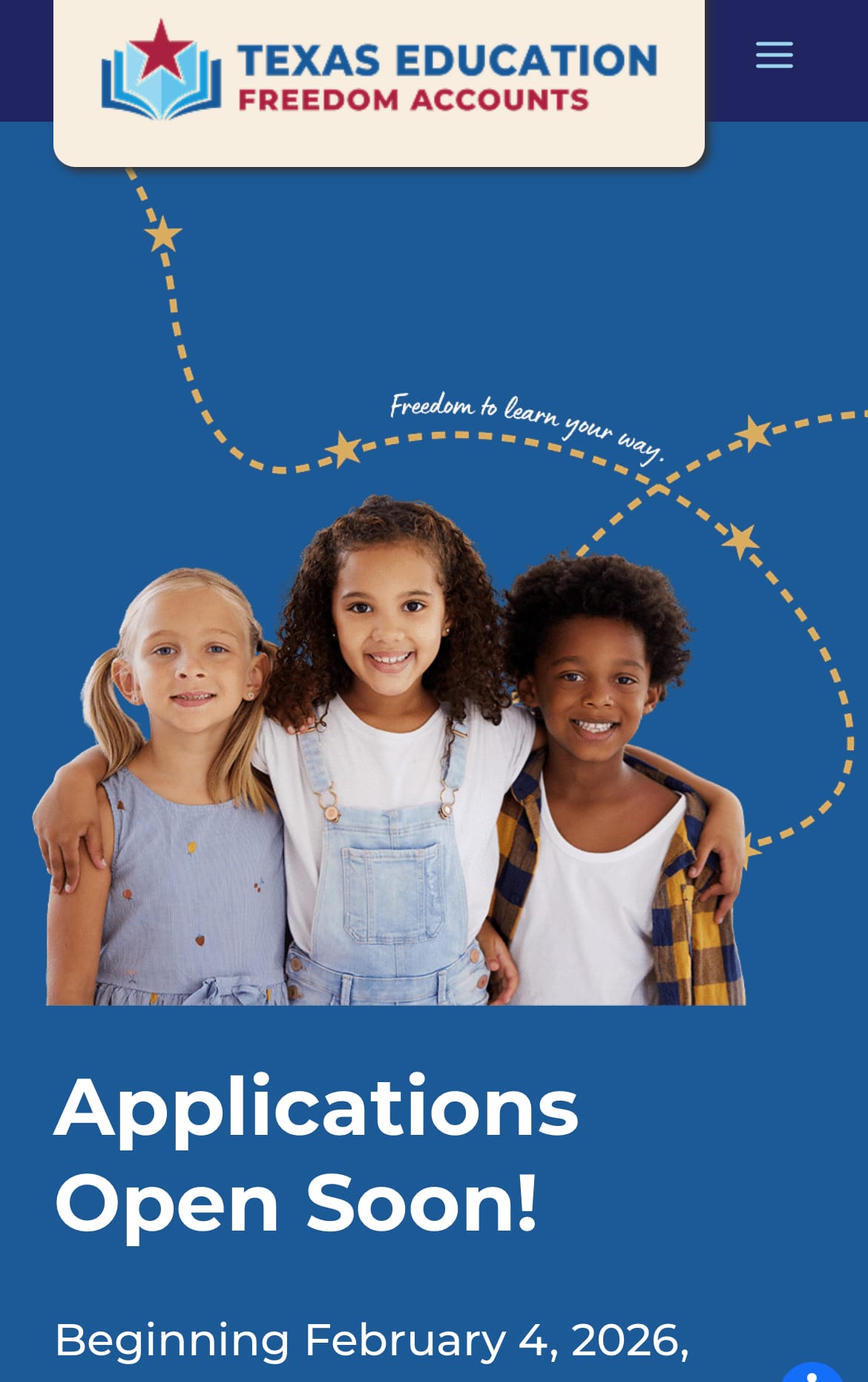
最近小編在看德州教育自由帳戶的資訊,在這裡想分享一下簡介。有興趣的人可以上官網了解更多資訊。
這是德州政府推出的一項教育儲蓄帳戶計畫,預計從2026–2027 學年開始實施。
官方網站:educationfreedom.texas.gov。
州政府會把教育經費放進家長名下的專用帳戶,讓家長自行用於孩子的教育開支。這是一個讓家長可以把「原本用在公立學校的教育經費」,改用在私校、自學、補習、治療與客製化教育方案上的德州官方計畫。
申請條件?
- 必須是德州居民+公民或是合法居民
- 必須符合在德州公立學校就讀的條件
- 學生本身必須有資格在德州公立學校或公立特許學校就讀(包括免費公立學前教育)。
- 進入 TEFA 計畫後,在使用 TEFA 資金的學年中不能同時全日制就讀公立或特許學校。
- 若申請人數超過名額,會進入優先順序 + 抽籤制度
家長申請時間(第一年):👉 2026 年 2 月 4 日 – 3 月 17 日
補助金額(官方估算)
- 私立學校學生:約每年 $10,000+ 美元
- 有身心障礙文件的學生:最高約 $30,000 美元
- 純在家自學(homeschool):約 $2,000 美元
實際金額每年會依州政府公告調整。
你可以將資金用於許多核准的教育相關用途,前提是服務提供者/廠商必須是州政府核准的單位。所有消費都必須透過 TEFA 官方線上系統(Odyssey) 進行。
可使用的項目包括:
- 課業輔導/家教服務(需具備合格認證的老師或機構)
- 教育相關治療服務,例如:
- 語言治療(Speech Therapy)
- 職能治療(Occupational Therapy)
- 物理治療(Physical Therapy)
- 行為治療(Behavioral Therapy)(前提是這些費用沒有已被 Medicaid、CHIP 或保險全額給付)
- 孩子課程所需的教科書與教材
- 雙學分課程或線上課程的費用
- 往返核准教育或治療機構的交通費
- 科技設備(如電腦、教育軟體),若為學習必需,且受年度金額比例上限限制(通常約不超過當年帳戶的 10%)
- 評估相關費用(測驗、能力評估、鑑定)
- 其他經 TEFA 規定核准、用於支持孩子個別化教育計畫的服務或課程
重要注意事項
- 只能用於合格支出:資金必須用於 TEFA 核准的教育用途,一般娛樂性或無關支出(例如普通才藝班、保險費)通常不允許。
- 必須透過官方系統付款:TEFA 平台會直接付款給學校或服務提供者,不是先由家長墊付再報銷。
- 未用完的錢可累積:若當年度未花完,餘額會保留在帳戶中,供未來學年持續用於合格教育支出(只要孩子仍在計畫內)。
What TEFA is
- A state-funded education savings account program created by the Texas Legislature in 2025 (Senate Bill 2).
- Administered by the Texas Comptroller of Public Accounts with oversight of how funds are used.
- It’s intended to expand education choice beyond traditional public schools.
How it works
- Families whose children are accepted into the program receive state funds deposited into an individual TEFA account. Parents then use that money for approved education costs.
- Approved expenses can include private school tuition and fees, textbooks, tutoring, therapies, transportation, online courses, curriculum, and some technology (with restrictions).
Eligibility & application
- Children must be Texas residents and eligible to attend a Texas public school or pre-K/charter program.
- Applications for families open February 4 – March 17, 2026 for the 2026-27 year.
- Participation isn’t guaranteed; if demand exceeds available funding, a prioritization and lottery system is used.
Funding amounts
- For the 2026-27 school year, estimated funding is roughly:
- ≈$10,474 per year for students attending approved private schools.
- Up to $30,000 for students with documented disabilities.
- ≈$2,000 for homeschool students or those not in private school.
Purpose
- The goal is to give parents more control over how public education dollars are spent for their child’s education — by letting them use state funds for alternatives to the traditional public school system.
You may spend money on many
approved education-related uses, as long as the vendor/provider is state-approved and the purchase is made through the TEFA online system (Odyssey).
Common eligible categories include:
- Tutoring services (with an appropriately certified tutor)
- Educational therapies such as:
- Speech therapy
- Occupational therapy
- Physical therapy
- Behavioral therapy(as long as not already fully covered by other benefits like Medicaid/CHIP or insurance)
- Textbooks & instructional materials required by your child’s program
- Dual-credit or online courses fees
- Transportation to/from approved providers
- Technology (computers, software) if required for education, subject to a cap (typically up to ~10% of the account that year)
- Assessment-related costs (testing and evaluation)
- Other approved services or programs that help support your child’s individualized educational plan and are permitted by TEFA rules
Important considerations
- Only eligible expenses count: Funds must be used for TEFA-approved purposes; casual or unrelated costs (like general extracurriculars or insurance) are generally not allowed.
- Must purchase through the official system: The TEFA portal handles payments to providers/vendors, not reimbursements to families.
- Unused money rolls over: If you don’t spend the full balance in one year, it stays in the account for future eligible educational uses while the child remains in the program.